Blog
A Reflection on Backend Development
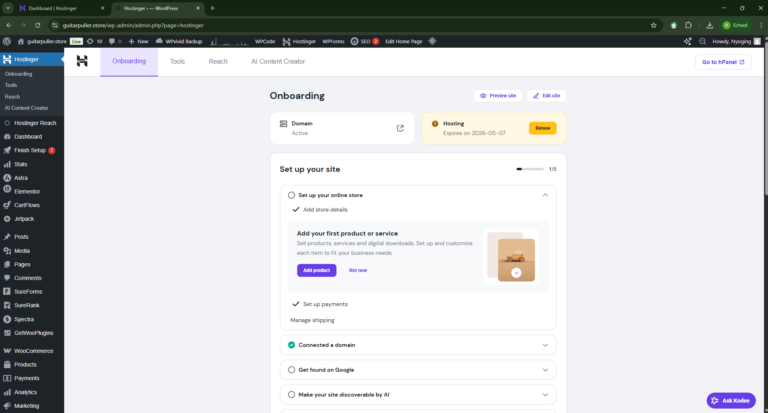
Transitioning from front-end aesthetics to back-end logic represented a significant milestone in my development as an IT student. Early in my studies, I focused primarily on how a website looked to the user, but the Online Guitar Store project forced me to shift my perspective toward how a site "thinks" and processes data. This reflection explores the mental shift required to handle server-side processing and the realization that the most powerful features of a website are often the ones the user never sees. During the development process, I encountered the steep learning curve of debugging logical errors that don't always show up as visual "broken" pieces on a screen. Overcoming these hurdles taught me the value of patience and systematic troubleshooting. I learned that backend development is less about pixel perfection and more about the integrity of the data flow and the efficiency of the scripts running behind the scenes. Ultimately, this experience has solidified my interest in full-stack development. Seeing a functional "Buy" button successfully process a request for the first time was incredibly satisfying. It proved that my understanding of PHP had moved beyond simple syntax and into the realm of creating functional, goal-oriented software that can solve business problems in a simulated e-commerce environment.
Overcoming the logic "learning curve."
Seeing the power of server-side code.
The satisfaction of a working "Buy" button.
Technical Foundations: Mastering PHP, OOP, and Data Flow
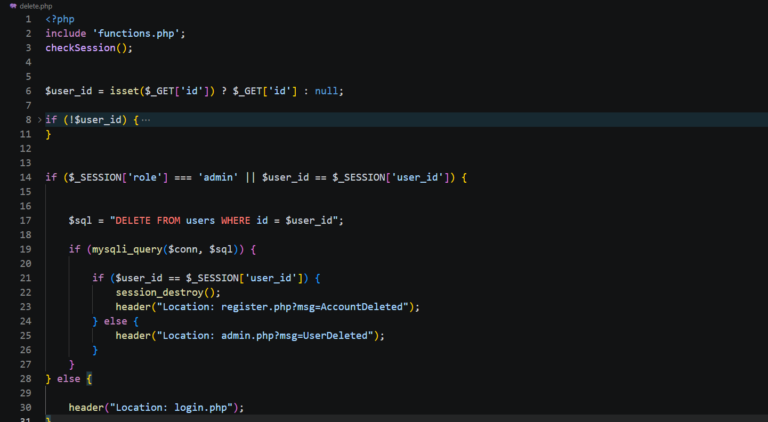
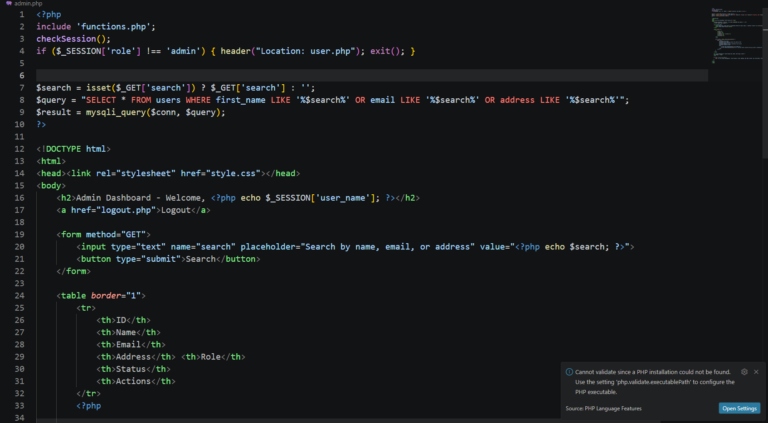
This post documents the core technical competencies I acquired during my second year, specifically focusing on PHP and Object-Oriented Programming (OOP). I delved deep into the "DRY" (Don't Repeat Yourself) principle, learning how to create reusable classes and methods to manage our guitar inventory. By understanding the lifecycle of a request—from the client browser to the server and back—I gained a comprehensive view of how modern web applications manage state and process information. A major focus of my learning was the integration of PHP with MySQL databases. I practiced securing user input using sanitization techniques to prevent common vulnerabilities like SQL injection, ensuring that the guitar store's data remained consistent and protected. Learning to write complex SQL queries allowed me to filter products dynamically, such as displaying only "Electric" or "Acoustic" guitars based on a user's specific search criteria. Beyond basic scripting, I explored the power of OOP to create a scalable architecture. By defining a "Guitar" class with properties like brand, model, and price, I could easily instantiate hundreds of unique products without rewriting code. This modular approach to programming has changed the way I architect my projects, making them much easier to maintain, update, and debug as the project requirements grow in complexity.
Mastering PHP variables and arrays.
Understanding Object-Oriented logic.
Writing efficient SQL queries.
My Final Project Experience
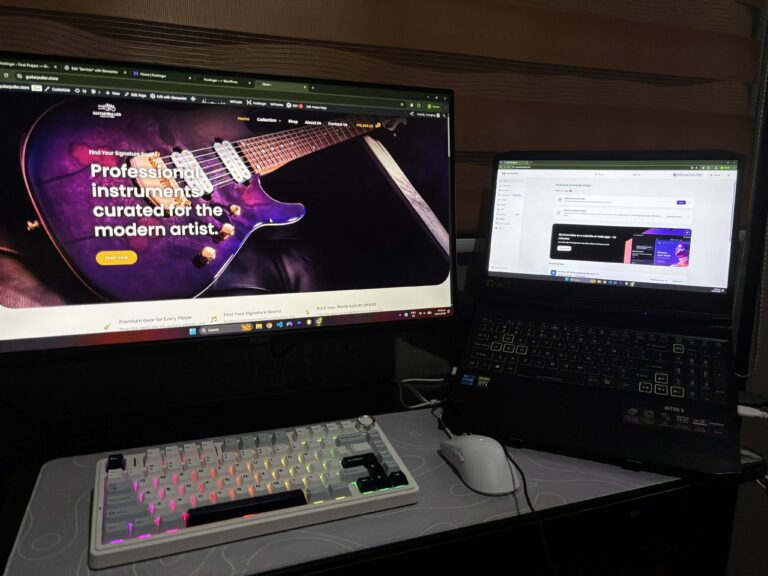
As my primary project this semester, we developed a fully functional WordPress-based online guitar store titled "The String Shop." This experience went far beyond simple theme installation; it required deep customization of templates and the use of PHP hooks to handle product categories and inventory management. My goal was to create a high-fidelity e-commerce concept that felt professional enough for a musician to trust, which meant paying close attention to both the visual branding and the technical backend. The project involved architecting a searchable inventory system for over 20 unique guitar models, each with its own metadata and pricing. I had to ensure that the database correctly linked images to descriptions and that the user interface remained responsive across all devices. This taught me the importance of mobile-first design in e-commerce, as many users browse for gear on their phones before making a purchase on a desktop. Throughout the development cycle, I focused on bridging the gap between creative design and technical functionality. I spent a significant amount of time optimizing the checkout flow to ensure it was intuitive and fast. This project served as a perfect laboratory for testing my PHP skills in a real-world scenario, proving that I can take a concept from a simple wireframe all the way to a functional, database-driven web application.
Customizing the Store UI/UX.
Managing a 10+ item guitar inventory.
Integrating a functional add to cart system.
Inclusive Engineering: Implementing WCAG 2.1 Standards
Quality software must be accessible to everyone, regardless of their physical or cognitive abilities. In this post, I detail my implementation of the Web Content Accessibility Guidelines (WCAG) within the Guitar Store project. I explored the "POUR" principles—Perceivable, Operable, Understandable, and Robust—and applied them by auditing my site’s color contrast and ensuring that all functional elements like buttons and forms were fully navigable via keyboard alone. One of the most eye-opening parts of this lesson was learning how screen readers interact with web content. I realized that without proper ARIA labels and semantic HTML, a visually impaired user would find it nearly impossible to navigate a guitar catalog. I took the time to write descriptive alt-text for every instrument, describing the finish, wood type, and body style, ensuring the store's "vibe" was communicated to everyone. Integrating these standards wasn't just about following rules; it was about building a better product for every user. By ensuring a 4.5:1 color contrast ratio and clear focus states for links, the website became easier to read for all users, including those in high-glare environments. This post emphasizes that accessibility should be a foundational requirement in the development process rather than an afterthought added at the end of a project.
Ensuring 4.5:1 color contrast ratios.
Implementing ARIA labels for screen readers.
Keyboard-only navigation testing.

System Deployment: Navigating Servers, Domains, and Hosting
The final stage of development is the transition from a local development environment (XAMPP) to a live, production-ready server. This post covers the systems administration side of my project, including the configuration of Domain Name Systems (DNS) and the use of FTP clients like FileZilla for file migration. Understanding the infrastructure that supports the code is just as vital as writing the code itself, as a website is only useful if it is accessible to the public. A significant challenge during deployment was syncing the local MySQL database with the live web host. I had to learn how to export database tables using phpMyAdmin, modify SQL files to match the new live URL, and import them into the host's database manager without losing data integrity. This process taught me the critical importance of backups and environment-specific configurations, which are essential skills for any IT professional managing web systems. Finally, I explored the relationship between domain names and nameservers. Managing DNS propagation and ensuring that the "Online Guitar Store" was reachable via its unique URL gave me a sense of ownership over the project. This final step in the development lifecycle closed the loop, moving the project from a private laboratory experiment on my personal computer to a live, global asset that can be viewed by anyone on the internet.searchable inventory system for over 20 unique guitar models, each with its own metadata and pricing. I had to ensure that the database correctly linked images to descriptions and that the user interface remained responsive across all devices. This taught me the importance of mobile-first design in e-commerce, as many users browse for gear on their phones before making a purchase on a desktop. Throughout the development cycle, I focused on bridging the gap between creative design and technical functionality. I spent a significant amount of time optimizing the checkout flow to ensure it was intuitive and fast. This project served as a perfect laboratory for testing my PHP skills in a real-world scenario, proving that I can take a concept from a simple wireframe all the way to a functional, database-driven web application.
Navigating CPanel and FileZilla.
Connecting Domain Names to Nameservers.
Moving databases from XAMPP to live servers.